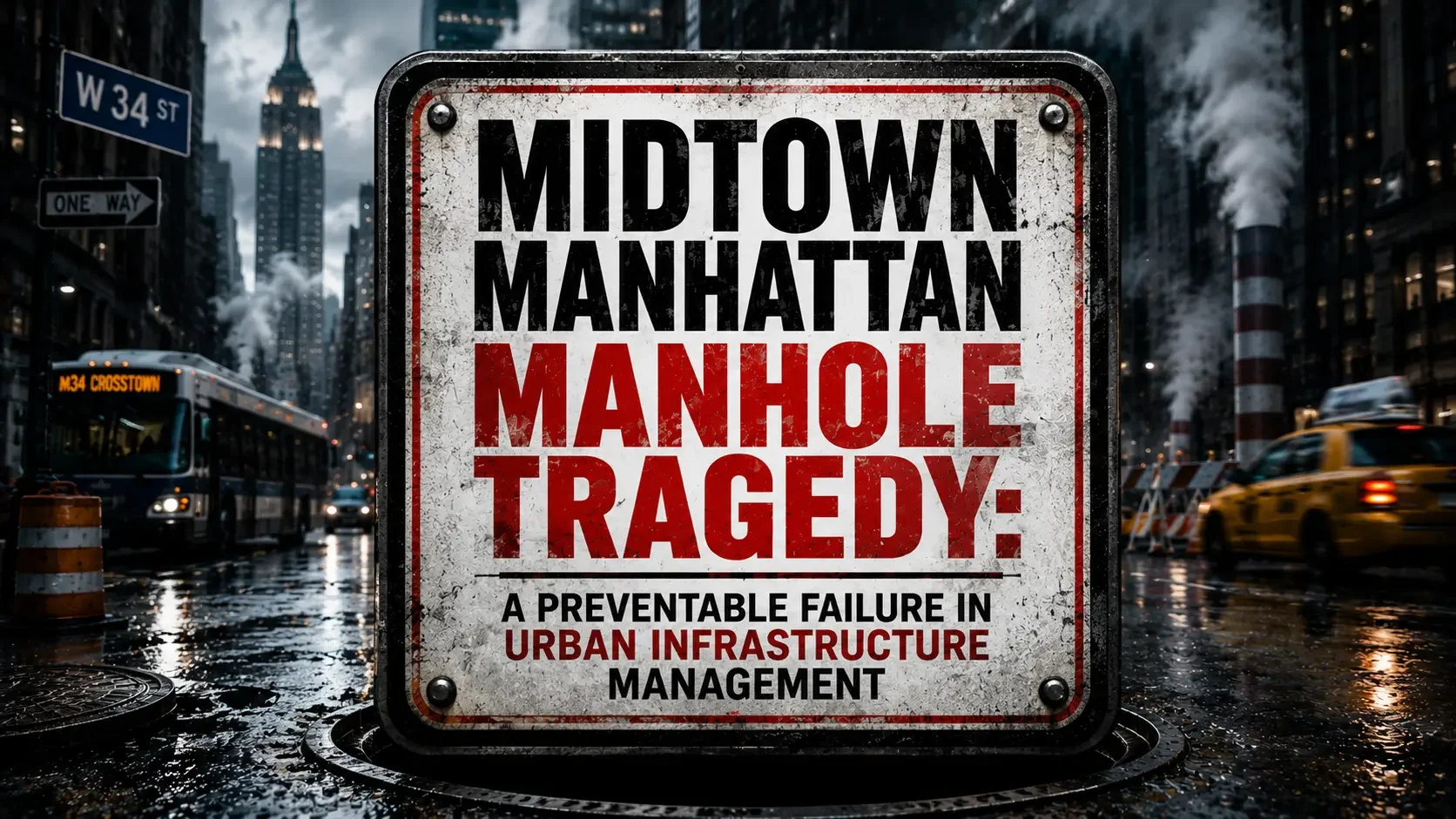
The Incident That Exposed Critical Infrastructure Gaps
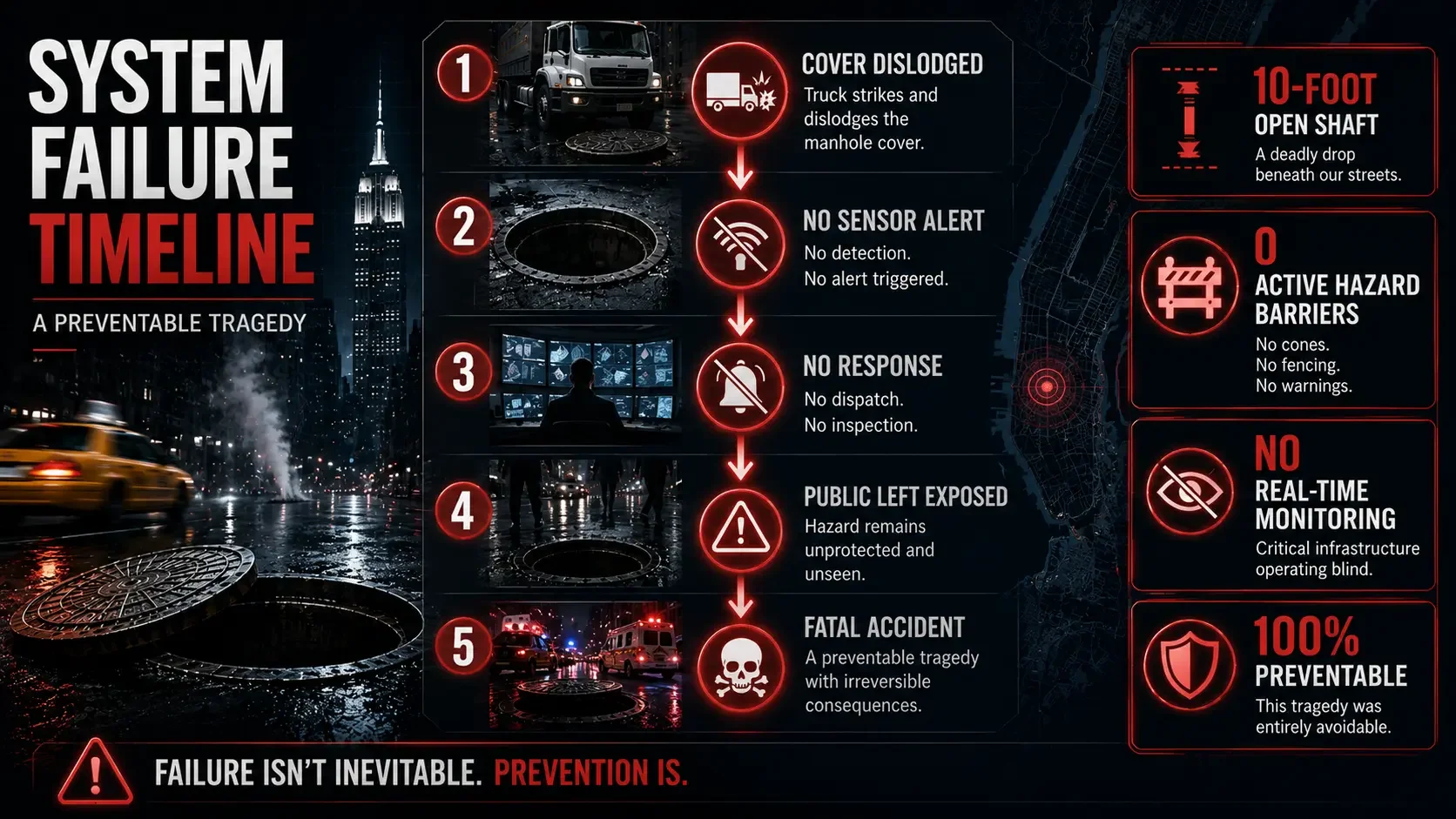
In the heart of Midtown Manhattan, a tragic and deeply unsettling incident unfolded when a 56-year-old woman lost her life after falling into an uncovered manhole. The sequence of events was as sudden as it was devastating. After stepping out of her parked vehicle, she unknowingly entered a hazardous zone where a manhole cover had been dislodged moments earlier by a passing truck, leaving behind a 10-foot-deep open shaft.
This was not merely an unfortunate accident, it was a systemic failure. A failure of monitoring, response, and operational discipline. In one of the most densely populated and highly trafficked urban environments in the world, such an oversight reveals a troubling gap between infrastructure presence and infrastructure performance.
Urban Infrastructure Risk: Hidden in Plain Sight
City infrastructure operates largely unnoticed, until it fails. Beneath the streets of Manhattan lies a vast network of utility systems, access points, and maintenance structures. Among them, manholes serve as essential gateways to underground systems. However, when improperly secured or insufficiently monitored, they become high-risk hazards.
In this case, the manhole cover was reportedly dislodged by vehicular force, a known and predictable risk in urban environments. Yet, what followed is where the system broke down entirely: no immediate detection, no rapid response, and no temporary safeguarding mechanism to prevent public exposure.
We recognize this not as an isolated event, but as a failure in layered safety systems that should have prevented such exposure altogether.
What Went Wrong: A Breakdown in Operational Control
1. Absence of Real-Time Monitoring
The infrastructure system lacked real-time awareness. Modern urban operations demand continuous condition monitoring, especially for high-risk assets like manholes in traffic-heavy zones. The absence of detection mechanisms allowed the hazard to remain unnoticed during a critical window.
2. Delayed or Nonexistent Response Protocols
Even in the absence of automated alerts, operational teams must rely on rapid-response frameworks. In this instance, there was no evidence of immediate dispatch, site inspection, or temporary hazard mitigation following the dislodgement.
3. Lack of Redundant Safety Measures
A properly managed system includes redundancies—fail-safes designed to protect the public when primary systems fail. These may include:
Locking or hinged covers
Weight-triggered alert systems
Temporary barriers or automated hazard indicators
None were present or activated.
4. Insufficient Asset Accountability
Infrastructure ownership and responsibility must be clearly defined and actively enforced. Ambiguity in asset management often leads to delayed action, fragmented oversight, and ultimately, preventable incidents.
Why This Matters: Beyond a Single Tragedy
This incident underscores a broader issue: aging infrastructure combined with outdated operational models. As cities grow denser and more complex, the margin for error shrinks dramatically.
We operate in environments where:
Pedestrian and vehicular interactions are constant
Infrastructure stress is continuous
Public safety expectations are absolute
A single uncovered manhole is not a minor oversight, it is a critical failure point capable of causing irreversible harm.
Hilltop Infrastructure Group: A Different Standard of Stewardship
At Hilltop Infrastructure Group, we approach infrastructure not as a passive investment, but as an active, long-term responsibility. Through our operational arm, Riviera Enterprises (REI), we implement a model built on precision, accountability, and proactive intervention.
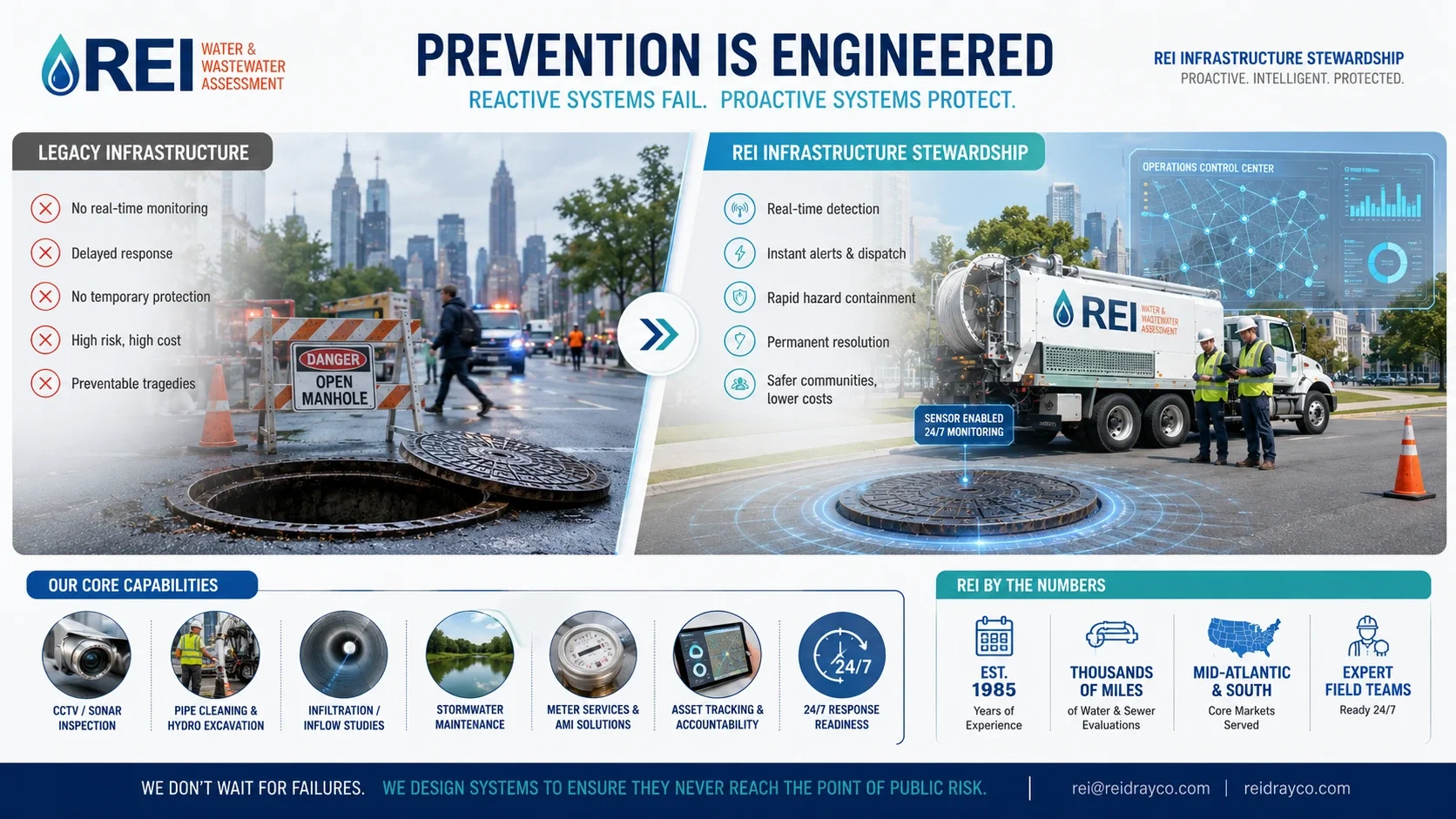
We do not wait for failures to occur. We design systems to ensure they never reach the point of public risk.
Our Operational Framework: Designed to Prevent, Not React
Proactive Asset Surveillance
We deploy advanced monitoring technologies across all critical infrastructure points. This includes:
Sensor-enabled manhole covers
Load and displacement detection systems
Real-time data transmission to centralized control hubs
Any anomaly, whether from vehicular impact or environmental factors—is immediately flagged and assessed.
Rapid Response Infrastructure
Detection alone is insufficient without execution capability. Our teams operate within strict response time thresholds, ensuring that:
Hazards are secured within minutes
Temporary protections are immediately deployed
Permanent resolution follows under controlled conditions
Redundancy Engineering
Every high-risk asset is reinforced with multi-layered safety systems, including:
Secondary locking mechanisms
Visual hazard indicators
Fail-safe structural designs
This ensures that even in the event of primary failure, public exposure is minimized or eliminated.
Operational Discipline and Accountability
We maintain clear ownership structures for every asset under our management. Each component is:
Tracked
Audited
Maintained under strict performance standards
There is no ambiguity. Responsibility is defined, measured, and enforced.
How This Incident Could Have Been Prevented
From our perspective, this tragedy was entirely avoidable. A properly managed system would have intervened at multiple stages:
Prevention at the Source
A secured or reinforced manhole cover would have resisted displacement from passing vehicles.Immediate Detection
Sensors would have identified the dislodgement instantly.Automated Alert and Dispatch
Control systems would have triggered an emergency response within seconds.Temporary Hazard Containment
Rapid deployment teams would have secured the site before pedestrian exposure.Permanent Resolution
Structural corrections would have been implemented under controlled conditions.
Each of these layers represents a standard practice within our operational model.
Infrastructure Ownership: A Long-Term Commitment
We reject the notion of infrastructure as a short-term asset. Instead, we embrace a philosophy of long-term ownership and stewardship. This means:
Investing in durability and resilience
Prioritizing community safety over cost minimization
Maintaining continuous operational oversight
Infrastructure is not static, it requires active management, constant vigilance, and uncompromising standards.
Building Safer Cities Through Operational Excellence
Urban environments demand precision-engineered systems backed by disciplined execution. The consequences of failure are too significant to ignore.
We believe that:
Safety is non-negotiable
Accountability must be absolute
Prevention is the only acceptable outcome
Through our integrated approach, we transform infrastructure from a latent risk into a reliable foundation for community life.
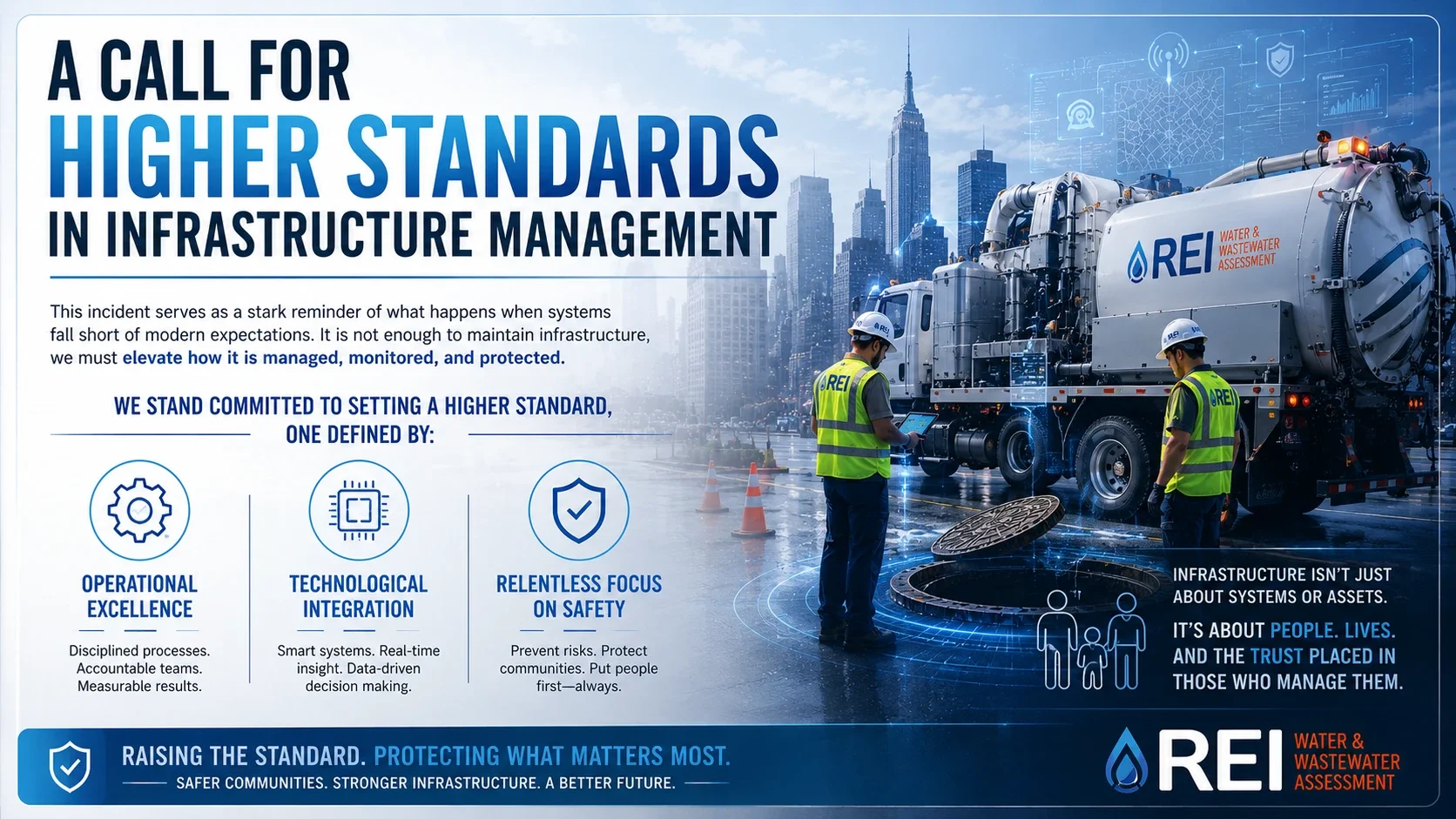
A Call for Higher Standards in Infrastructure Management
This incident serves as a stark reminder of what happens when systems fall short of modern expectations. It is not enough to maintain infrastructure, we must elevate how it is managed, monitored, and protected.
We stand committed to setting a higher standard, one defined by:
Operational excellence
Technological integration
Relentless focus on safety
Because in the end, infrastructure is not just about systems and assets—it is about people, lives, and the trust placed in those who manage them.